Tuesday, September 18, 2012
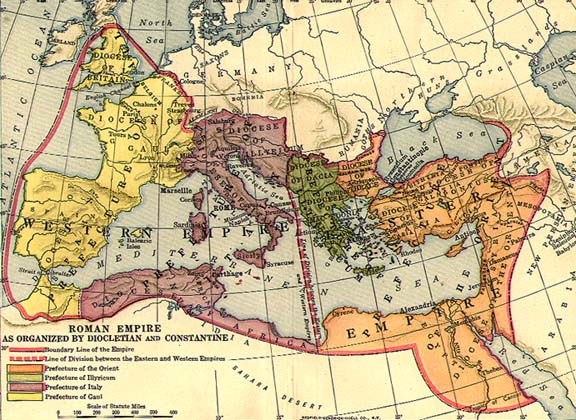
Why Christianity became the Roman Empire's religion
Saturday, August 18, 2012
Tuesday, June 5, 2012
Thursday, January 26, 2012
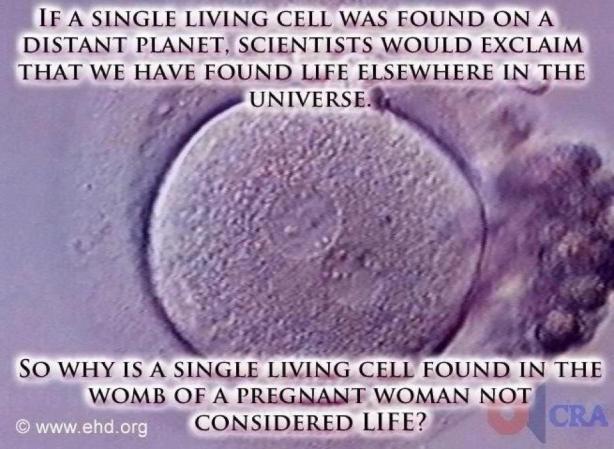
So now abortion is safer than childbirth? Safer to whom?
TIME has published a study that says that abortion is safer than child birth. Yes, you read that right. According to this new study, abortion supposed risks are none existence.
Abortion has a scary reputation, regardless of whether you’re for or against it. But the perception that it’s a high-risk procedure isn’t rooted in truth, according to new research.
Although more than half of states counsel women on the risks of abortion, a study published online Monday in Obstetrics & Gynecology finds that a legal abortion is actually far safer than giving birth.From the beginning, you can ask, "safer to whom? Not for the baby of course, who is killed. Does the baby in the womb count for something to this people? What if they were threatened when they were at the womb with death, would they still say the same about abortion being safe?
The research discovered that women are actually 14 times more likely to die during or after delivery than as a result of complications from abortion. “There’s a lot of stigma surrounding abortion,” says Elizabeth Nash, who tracks state policies on reproductive health for the N.Y.-based Guttmacher Institute, a pro-choice reproductive health research group. “This study is telling us it’s a lot safer than having a baby.”There you go, a group that promotes abortion says that abortion is safe, and even better than giving birth, is not surprising for them to reach such a conclusion. Well, if it is safer to abort than giving birth, then I think they hope for people to abort by hordes, and make them a lot of money along the way. What's a baby for them? Worthless as it seems, seems it doesn't matter if the baby dies during abortion, therefore, it's not safe for the baby.
Twenty-six states have intensive counseling for women who seek abortions. Some of the states distribute materials with questionable information, such as the risk of breast cancer after having an abortion or the negative impact on mental health.
“The people developing these counseling materials are not really interested in talking about the facts,” says Nash, who wasn’t involved in the study. “They are interested in persuading a woman from getting an abortion in the first place.”
That said, most of the counseling materials also includes information about the risks of pregnancy, although it can get overshadowed by the emphasis on the dangers of abortion.Well, I don't know about cancer, but sounds about right. But a woman who performs a lot of abortions, may damage their womb so much, that they end up being unable to hold onto an embryo, therefore, never being able to have a baby.
The article goes on praising the new figures about abortion, and how better it is to abort than to give birth. I wonder, if everybody opts to abort, within a few years, these people would go broke, since there wouldn't be anybody to abort!!
It is a good thing, that at the end, and with few lines, the study was refuted. But I get the feeling that the article wanted to promote abortion, rather than to report on the new study.
Anti-abortion groups took issue with the study, complaining, as did Paul Wilson of the Culture and Media Institute in a post on LifeNews.com titled “Reuters Pushes Biased Study Claiming Abortion Safer Than Birth,” that the researchers “were either abortion doctors or had strong ties to the abortion industry.”
Dr. Donna Harrison, director of research and public policy at the American Association of Pro-Life Obstetricians and Gynecologists, told HealthDay News that she doubted the study’s findings and called them “speculation.”If the authors of the "study" have strong ties to the abortion industry (yes, it is an industry, they make millions out of killing innocent kids), then such a study is suspect to the most!!
We will have to wait till another, more credible study appears, to see if really it's safer to abort than to give birth.
But then again, even if it would be clinically true, you know that by killing the baby, that position is totally wrong!!
Saturday, January 21, 2012
Obama Administration just became American Christianity's worst enemy.
Obama Admin. Gives Church-Affiliated Institutions 1 Year to Comply to Birth Control Coverage Rule - Urban Christian News
Friday, January 20, 2012
3,000 babies die a day, not from hunger, not from neglect, but from abortion.
Thursday, September 29, 2011
Are you ok with the Holocaust? If not, why are you ok with abortion?
Saturday, September 24, 2011
N. T. Wright on the Death Penalty
I've heard an interview in Issues Etc. Tim Goeglein, author of the book, “The Man in the Middle: An Inside Account of Faith and Politics in the George W. Bush Era”.
From the interview, I gather that the man wants to sell his book, which is ok. But while listening to him, I kept asking myself, how can he say he has been the most pro-life president if he started two wars, approved of rendition kidnappings, bombed thousands upon thousands of civilians in Afghanistan while searching for Osama Bin Laden, and left more dead in Irak than when Saddam Hussein was there. Either he was a very stupid person, along with his other White House staffers, who believed Malaki and all the others Iraki opposition members, or his god doesn't guide him, period.
I don't think Bush he was a pro-life president. How inconsistent, you defend life before you get out of womb, while you don't have any qualms with killing innocent people just to get one man. And like I said before, not killing 1 or 5 personas, but thousands. Americans have to go out of their national news to find out what really is happening, since the news networks, not only FOX, are so patriotic as to be objective in their news coverage.
American Christians and the death penalty
You can’t reconcile being pro-life on abortion and pro-death on the death penalty. Almost all the early Christian Fathers were opposed to the death penalty, even though it was of course standard practice across the ancient world. As far as they were concerned, their stance went along with the traditional ancient Jewish and Christian belief in life as a gift from God, which is why (for instance) they refused to follow the ubiquitous pagan practice of ‘exposing’ baby girls (i.e. leaving them out for the wolves or for slave-traders to pick up).
Mind you, there is in my view just as illogical a position on the part of those who solidly oppose the death penalty but are very keen on the ‘right’ of a woman (or couple) to kill their conceived but not yet born child...
From where many of us in the UK sit, American politics is hopelessly polarized. All kinds of issues get bundled up into two great heaps. The rest of the world, today and across the centuries, simply doesn’t see things in this horribly oversimplified way...
While we’re about it, how many folk out there were deeply moved both by the reading of the 9/11 victim names and by the thought that if they’d read the names of Iraqi civilians killed by your country and mine over the last ten years we’d have been there for several days?
N.T. WRIGHT | SEP 15, 2011 10:29 AM
Saturday, June 5, 2010
Tuesday, May 6, 2008
Plant Rights, Screaming Vegetation, and a "Biocentric" Worldview
Several years ago now, I was appearing on a national network interview program and found myself discussing capital punishment with a woman who, during a commercial break, indicated that she had recently seen a combine going through a wheat field. She was horrified. The wheat was being cut down by thousands of stalks a second. She felt grief for the wheat, she revealed.
No one person on the panel knew what to do with that off-hand statement. I think it is safe to say that none of us had ever grieved over the intentional harvesting of vegetation.
Now, ethicist Wesley J. Smith indicates that an ethics panel in Switzerland has decided that "the arbitrary killing of flora is morally wrong." Writing in the current edition of The Weekly Standard, Smith explains that the idea of "plant rights" is now a matter of serious consideration among the Swiss.
The background to the current panel is a constitutional clause adopted years ago in Switzerland that demands Swiss citizens to recognize "the dignity of creation when handling animals, plants and other organisms." Until just recently, no one seems to have expected that this would lead to a plants rights movement.
As Smith explains, the Swiss panel came up with a radical conclusion based in a radical worldview:
A "clear majority" of the panel adopted what it called a "biocentric" moral view, meaning that "living organisms should be considered morally for their own sake because they are alive." Thus, the panel determined that we cannot claim "absolute ownership" over plants and, moreover, that "individual plants have an inherent worth." This means that "we may not use them just as we please, even if the plant community is not in danger, or if our actions do not endanger the species, or if we are not acting arbitrarily."
Smith rightly points to this kind of logic as "a symptom of a cultural disease that has infected Western civilization, causing us to lose the ability to think critically and distinguish serious from frivolous ethical concerns."
The very idea of "plants rights" indicates a loss of cultural sanity. Until now, this cultural confusion has been most evident in the animal rights movement -- a movement that presents some legitimate ethical concerns but pushes its ideology beyond sanity. The failure to distinguish between human beings and the larger animal world is a hallmark of a post-Christian culture. The extension of this ideology to vegetation is a frightening sign of mass delusion.
Wesley Smith gets it just right:
Why is this happening? Our accelerating rejection of the Judeo-Christian world view, which upholds the unique dignity and moral worth of human beings, is driving us crazy. Once we knocked our species off its pedestal, it was only logical that we would come to see fauna and flora as entitled to rights.
So, now Swiss ethicists are working up protocols on "plant dignity" and determining scenarios that might qualify as a violation of "plant rights." The Swiss panel's report, "The Dignity of Living Beings with Regard to Plants," is a wake-up call. The adoption of a "biocentric" worldview is a leap into irrationality. Good arguments can be made for responsible agricultural practices that honor God by demonstrating care for creation. But the ideology of "plant rights" and the suggestion of something like an inherent "right to life" for vegetation is beyond all reason.
The most tragic dimension of all this is that a culture increasingly ready to euthanize the old, infanticize the young, and adamant about a "right" to abort unborn human beings, will now contend for the inherent dignity of plants. Can any culture recover from this?
Wednesday, May 16, 2007
As Harmon reports:
Abortion rights supporters -- who believe that a woman has the right to make decisions about her own body -- have had to grapple with the reality that the right to choose may well be used selectively to abort fetuses deemed genetically undesirable. And many are finding that, while they support a woman's right to have an abortion if she does not want to have a baby, they are less comfortable when abortion is used by women who don't want to have a particular baby.
"How much choice do you really want to give?" asked Arthur Caplan, chairman of the department of medical ethics at the University of Pennsylvania School of Medicine. "That's the challenge of prenatal testing to pro-choicers."
We knew this was coming, and the expanding availability of genetic testing will make the situation ever more complex and the options even more ominous. What about those who would abort a baby of the wrong sex . . . or eye color . . . or likely intelligence?
Here is a frightening section of the paper's report:
But Kirsten Moore, president of the pro-choice Reproductive Health Technologies Project, said that when members of her staff recently discussed whether to recommend that any prenatal tests be banned, they found it impossible to draw a line -- even at sex selection, which almost all found morally repugnant. "We all had our own zones of discomfort but still couldn't quite bring ourselves to say, 'Here's the line, firm and clear' because that is the core of the pro-choice philosophy," she said. "You can never make that decision for someone else."
That same point is made by Nancy Keenan, president of NARAL Pro-Choice America. She provided the paper with a statement that included these lines:
"This issue underscores the importance of families making personal, private decisions without political interference . . . The decision should be with women, their families, and their doctors."
The answer coming from groups like NARAL is a simple "no." And they apparently mean it.
Professor Althouse should talk to Dan Neil, whose argument for unrestricted abortion rights sends chills down the spine.
Neil's column, "The Abortion Debate Brought Home," was published in the May 6, 2007 edition of The Los Angeles Times.
Here is how he begins:
My wife and I just had an abortion. Two, actually. We walked into a doctor's office in downtown Los Angeles with four thriving fetuses -- two girls and two boys -- and walked out an hour later with just the girls, whom we will name, if we're lucky enough to keep them, Rosalind and Vivian.
Neil and his wife aborted two boy fetuses in order to increase the chances for two healthy girls. All of this resulted from an IVF procedure and the option of "selective reduction" that is urged upon parents by many doctors.
As Neil explains, "We don't feel guilty. We don't feel ashamed. We're not even really sad, because terminating these fetuses -- at 15 weeks' gestation -- was a medical imperative."
That is a redefinition of "imperative," and the claim completely side-steps the moral responsibility of using a technology that is almost certain to present this awful choice.
Added to all this, Tom Strode of Baptist Press reports that the Human Fertilisation and Embryology Authority in Britain has allowed human embryos to be tested for eye squint. As Strode explains, "The news marked an ominous milestone -– supposedly the first embryo screening for a cosmetic flaw."
More:
The director of the London Bridge Fertility, Gynaecology and Genetics Centre, which gained the license from the HFEA, told BBC News it was more than a cosmetic condition.