Showing posts with label Christianity. Show all posts

Wednesday, October 15, 2014

African Christians don't read African authors - The same goes for Latin Americans.

This blog is written by a Latin American, so many things will have to do with how I see the world from a Latin American perspective.

Christianity Today has published an article that mentions how Africans are reading more christian American authors rather than authors from their own continent, that also write christian books. The article gives many reasons why authors from Africa don't feel compelled to write, but it also reflects the interest within the African community about prosperity gospel, and also about how much they know about the American type of Christianity, and how little they know about their own.

In Latin American, we suffer a similar thing. The prosperity Gospel teachers chew books out of the printer regularly. There's also a growing section of Christianity that are reading faithful Christian writers from the USA, Canada, Australia and Europe. This is good, but they don't go beyond that. Some, only read Reformed flavoured literature, and at times, only XVI century writers, that don't relate to the practical pastoral issues being faced in the continent.

This article, along with that particular whole issue of Christianity Today, opens us to the world of how diverse Christianity can be. It's not a sin to be different, if we are still faithful to the word of God.

Saturday, December 29, 2012

Buying Christianity Today's book of the year

If you want to get into real biblical theology, let me commend you to buy the following book:
A New Testament Biblical Theology, A: The Unfolding of the Old Testament in the New by G. K. Beale.


If you click the link, you will be helping for the upkeep of this blog. 

Tuesday, September 18, 2012

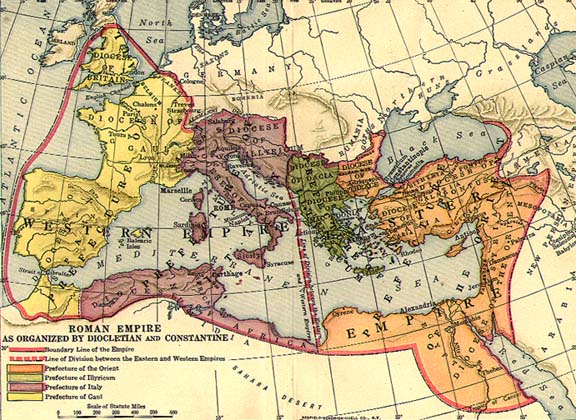
Why Christianity became the Roman Empire's religion


Christianity became the Roman Empire’s designated religion in less than 300 years from Christ’s resurrection. Its success came from opposing abortion and female infanticide, treating women almost equally and giving them more opportunities, loving neighbours and caring for the sick and poor, and having courageous martyrs (Herald Sun 17/9/12 p20, 21).

Monday, August 6, 2012

Christianity must change or die, but not like Gene Robinson suggested

I've been told that the church must change in order to continue as a living organism. But the people who tell me that, usually belong to churches that are dying, exactly for implementing the changes they suggest to me.

Ross Douthat, has written a good piece dealing with this issue in the New York Times, where he deals with this issue. Liberals have been telling us for years that the church must change in order to stay alive, but the churches lead by liberals are the ones dying because of their misguided change.


Can Liberal Christianity Be Saved?IN 1998, John Shelby Spong, then the reliably controversial Episcopal bishop of Newark, published a book entitled “Why Christianity Must Change or Die.” Spong was a uniquely radical figure — during his career, he dismissed almost every element of traditional Christian faith as so much superstition — but most recent leaders of the Episcopal Church have shared his premise. Thus their church has spent the last several decades changing and then changing some more, from a sedate pillar of the WASP establishment into one of the most self-consciously progressive Christian bodies in the United States. 
As a result, today the Episcopal Church looks roughly how Roman Catholicism would look if Pope Benedict XVI suddenly adopted every reform ever urged on the Vatican by liberal pundits and theologians. It still has priests and bishops, altars and stained-glass windows. But it is flexible to the point of indifference on dogma, friendly to sexual liberation in almost every form, willing to blend Christianity with other faiths, and eager to downplay theology entirely in favor of secular political causes.

Spong was wrong then, and is wrong now. He wants to kill of Orthodox Christianity, so it doesn't stand in the way of his sinful life, but at the end, he seems to had inflicted a wound to his own type of christianity. The issue was then, and is now, that those who should have known better, did nothing, instead went on to dismantle the Episcopal Church in order to be in the good graces of today's society and culture.  So there's no interest in defending the truth of the Bible against a society that needs it so much, rather, picks up their political fights, which contradict the Gospel at its core.


Yet instead of attracting a younger, more open-minded demographic with these changes, the Episcopal Church’s dying has proceeded apace. Last week, while the church’s House of Bishops was approving a rite to bless same-sex unions, Episcopalian church attendance figures for 2000-10 circulated in the religion blogosphere. They showed something between a decline and a collapse: In the last decade, average Sunday attendance dropped 23 percent, and not a single Episcopal diocese in the country saw churchgoing increase.

Well, there's nothing they can offer but the same thrush that the young people are facing outside the church. We don't see a great increase in the audience they intended to target. In Australia, the Uniting Church, is experiencing something similar. Yet, the churches it was meant to replace, seem to either thrive (the Methodist), or at least survive (the Presbyterians).


This decline is the latest chapter in a story dating to the 1960s. The trends unleashed in that era — not only the sexual revolution, but also consumerism and materialism, multiculturalism and relativism — threw all of American Christianity into crisis, and ushered in decades of debate over how to keep the nation’s churches relevant and vital. 
Traditional believers, both Protestant and Catholic, have not necessarily thrived in this environment. The most successful Christian bodies have often been politically conservative but theologically shallow, preaching a gospel of health and wealth rather than the full New Testament message.
My sentiment as well. But I wouldn't call prosperity Gospel people "traditional believers". They are as far from the Gospel as the Mormons or Jehova Witnesses. They have a total different religion. These churches thrive, not because they are Gospel driven, rather, because they are money driven. People want money and wealth, so they go to these churches to get a hand of how to obtain it, or make it.

But if conservative Christianity has often been compromised, liberal Christianity has simply collapsed. Practically every denomination — Methodist, Lutheran, Presbyterian — that has tried to adapt itself to contemporary liberal values has seen an Episcopal-style plunge in church attendance. Within the Catholic Church, too, the most progressive-minded religious orders have often failed to generate the vocations necessary to sustain themselves.
Not all Methodist, Lutheran or Presbyterians are going the way of the dinosaurs, but those denominations that have adopted the Episcopal way, are going the way of the Episcopal church.

Both religious and secular liberals have been loath to recognize this crisis. Leaders of liberal churches have alternated between a Monty Python-esque “it’s just a flesh wound!” bravado and a weird self-righteousness about their looming extinction. (In a 2006 interview, the Episcopal Church’s presiding bishop explained that her communion’s members valued “the stewardship of the earth” too highly to reproduce themselves.) 
Liberal commentators, meanwhile, consistently hail these forms of Christianity as a model for the future without reckoning with their decline. Few of the outraged critiques of the Vatican’s investigation of progressive nuns mentioned the fact that Rome had intervened because otherwise the orders in question were likely to disappear in a generation. Fewer still noted the consequences of this eclipse: Because progressive Catholicism has failed to inspire a new generation of sisters, Catholic hospitals across the country are passing into the hands of more bottom-line-focused administrators, with inevitable consequences for how they serve the poor. 
 Liberals don't want to accept their peril. As we see in the case of Katherine Jefferts Schori, she wants to window dress their declining numbers by passing it as a way of "stewardship of the earth". This type of denial would not be allowed in other quarters. And in the case of "progressive" Catholicism, it just won't get people inside their orders. If some progressives nuns wants to affirm somebody's homosexuality, why would, they in turn, would quit being a lesbian in order to turn into a life of celibacy?


But if liberals need to come to terms with these failures, religious conservatives should not be smug about them. The defining idea of liberal Christianity — that faith should spur social reform as well as personal conversion — has been an immensely positive force in our national life. No one should wish for its extinction, or for a world where Christianity becomes the exclusive property of the political right.

May the Lord deliver us from the right to take the face of Christianity!!!!

What should be wished for, instead, is that liberal Christianity recovers a religious reason for its own existence. As the liberal Protestant scholar Gary Dorrien has pointed out, the Christianity that animated causes such as the Social Gospel and the civil rights movement was much more dogmatic than present-day liberal faith. Its leaders had a “deep grounding in Bible study, family devotions, personal prayer and worship.” They argued for progressive reform in the context of “a personal transcendent God ... the divinity of Christ, the need of personal redemption and the importance of Christian missions.” 
Today, by contrast, the leaders of the Episcopal Church and similar bodies often don’t seem to be offering anything you can’t already get from a purely secular liberalism. Which suggests that per haps they should pause, amid their frantic renovations, and consider not just what they would change about historic Christianity, but what they would defend and offer uncompromisingly to the world.Absent such a reconsideration, their fate is nearly certain: they will change, and change, and die.

I wonder then, how these "liberals" couldn't pass on their faith to the next generation. There's still much we have to learn. 

Sunday, June 3, 2012

Alister McGrath on Defending Christianity

“The best defense of Christianity is its explanation. In other words, if you want to defend or commend Christianity, it is best to begin by telling people what it is really all about.”

 - Alister McGrath

Friday, May 18, 2012

Stand Firm | Same-Sex Marriage in Medieval Irish Churches? Boswell Sinks to a New Academic Low

Check how low some will go in order to proclaim that gay marriage has been held in the past by the church.

This is an example of how people, who are supposedly scholars, want to portray Christianity as having always accepted and suported gay marriage. Nothing could be further from the truth.

Read the link, and be amazed.

Stand Firm | Same-Sex Marriage in Medieval Irish Churches? Boswell Sinks to a New Academic Low

The Juvenilization of American Christianity

A brand new book that touches a very important subject that many may not have considered.

This is also applicable to us here in Australia.

I will try to buy this book, as soon as possible!!

Wednesday, January 11, 2012

While we are in the topic of sex, does the Bible allow lesbian sex? Some crazy christian and Jews believe it does

It is true! I've read in many websites that the Old Testament (the Jewish part of the Bible) does not condemned lesbian sex. Well, in the New Testament (the Christian part of the Bible) does explicitly condemned lesbian sex, Romans 1:26.

However, some people, because there's no condemnation in the Old Testament against lesbianism, they wish to promote that there's nothing wrong with a lesbian relationship.

This view is prevalent in liberal christianity, but also very much present in liberal Judaism. Sometimes the later say that the Rabbis of old were in hand with such a view. However, let's see what the one who is considered the greatest of the rabbis think about it, Maimonides:

For women to be mesollelot with one another is forbidden, as this is the practice of Egypt, which we were warned against: "Like the practice of the land of Egypt . . . you shall not do" (Leviticus 18:3). The Sages said [in the midrash of Sifra Aharei Mot 8:8–9], "What did they do? A man married a man, and a woman married a woman, and a woman married two men."Even though this practice is forbidden, one is not lashed [as for a Torah prohibition] on account of it, since there is no specific prohibition against it, and there is no real intercourse. Therefore, [one who does this] is not forbidden to the priesthood because of harlotry, and a woman is not prohibited to her husband by this, since it is not harlotry.But it is appropriate to administer to them lashings of rebellion [i.e., those given for violation of rabbinic prohibitions], since they did something forbidden. And a man should be strict with his wife in this matter, and should prevent women known to do this from coming to her or from her going to them.

So same sex marriage, according to Maimonides, it's not something new, but has been with us before. Good thing the ancient open their eyes and saw that it was not good for humanity!!

Anyway, lesbianism, and any other kind of deviancy, is not allowed in the Scriptures!!!

Wednesday, November 9, 2011

It depends how much money you have or dont have that defines how you view God

 Christianity Today has published a very helpful graph that shows that it depends how much you earn, that you you believe if God does have a plan for your life.

The graph also shows that if you believed that the USA was a very religious country, you are wrong.  The USA is not as exceptional as some like to think.

It is interesting to think that those who have a belief that God has a plan for their lives, are more likely that those who work, will reach their dreams, and are opposed for any intervention by the government in culture and society, specially with the poor. Some believe that less government, means that the hand of God is more involved!!

Check the link, to see the complete graph.

Luis A. Jovel

Tuesday, October 25, 2011

Jesus in Continuum

I wish I could buy this book, just that the price is a bit out of range right now. On the other part, I see this as a good development, placing Jesus in the transition from 1st century Judaism to early Christianity.


Ed. by Tom Holmén

One of the central characteristics of the latest historical Jesus research has been the attempt to locate Jesus plausibly within first-century Judaism. Less emphasis has been placed on the question as to whether or how, if at all, the image of Jesus within the Jewish context also suits and accounts for the history of the influence and reception of Jesus in early Christianity. Tom Holmén urges that the Christian reception history of Jesus be given a proper role in research. He argues that the scrutiny of the reception should not be a mere appendage to the more careful study of Jesus within Judaism. Instead, the reception should be given equally serious attention and form an integral part of scholarly pursuits. As a result, one no longer studies Jesus “within Judaism” but “in continuum,” namely in the continuum from early Judaism to early Christianity. The articles of this volume outline a continuum approach to the historical Jesus. They are divided into three areas exhibiting different aspects of the continuum approach: theoretical aspects, Jesus meets Christianity, and Jesus from Judaism to Christianity.

Saturday, October 15, 2011

Was Lewis a real Evangelical?


Kevin Deyoung has written on something I have been saying for a while now.

I am sorry if you are a C. S. Lewis follower, but that's how many of us see him.

KEVIN DEYOUNG|5:44 AM CT 

Cautions for Mere Christianity

C.S. Lewis’ Mere Christianity is a classic. It is a winsome, thoughtful, well-written defense of the Christian faith. Some of its better known sections–like the famous liar, lunatic, Lord, trilemma–have become part of the way evangelicals think and speak. No doubt God has used Lewis and Mere Christianity to awaken affections for Christ, engage the mind for Christ, and remove obstacles for the Spirit to draw people to Christ. I’m thankful for all this. More than that, I’ve benefited from every Lewis book I’ve read.
But C.S. Lewis was not an evangelical. Mere Christianity shows why.
Let me highlight two significant problems.
Atonement, But How?
The first caution to raise concerns Lewis’ view of the atonement. Lewis believed Jesus died on the cross for sin, but he didn’t think it was important to understand the particulars of what Christ accomplished on the cross.
Now before I became a Christian I was under the impression that the first thing Christians had to believe was one particular theory as to what the point of this dying was. According to that theory God wanted to punish men for having deserted and joined the Great Rebel, but Christ volunteered to be punished instead, and so God let us off. Now I admit that even this theory does not seem quite so immoral and silly as it used to; but that is not the point I want to make. What I came to see later on was that neither this theory nor an other is Christianity. The central belief is that Christ’s death has somehow put us right with God and given us a fresh start. Theories as to how it did this are another matter: A good many different theories have been held as to how it works; what all Christians are agreed on is that it does work. (57-58 [pagination varies by edition)
Later Lewis says that “Christ was killed for us” and “His death has washed out our sins” but “any theories we build up as to how Christ’s death did all this are, in my view, quite secondary” (59). This impatience of careful thinking about the atonement is bad enough, but then Lewis goes on to make clear that he rejects the understanding of the atonement evangelicals (and the Bible I would say) find most central and most glorious.
The one most people have heard is the one I mentioned before–the one about our being let off because Christ had volunteered to bear a punishment instead of us. Now on the face of it that is a very silly theory. If God was prepared to let us off, why on earth did He not do so? And what possible point could there be in punishing an innocent person? None at all that I can see, if you are thinking of punishment in the police-court sense. On the the other hand, if you think of a debt, there is plenty of point in a person who has some assets paying it on behalf of someone who has not. (59)
Pay careful attention to what Lewis says in that paragraph. He does believe in a substitutionary theory of the atonement, but he rejects penal substitution. He admits that penal substitution is not quite as silly as it once sounded, but he still does not accept it. Instead, he argues that Christ pays a debt (which is true), but not as a punishment for our sakes.
Lewis’ theology of the atonement is confusing (see for example this helpful Touchstone article), but I would argue his view is more like Christus victor or ransom to Satan than penal substitution. Aslan’s death, you may recall, was a sacrifice to the Witch and was explained rather ambiguously as “deeper magic.” This is not the place to defend the critical importance of penal substitution. My point is simply that Lewis does not teach it in Mere Christianity, and in fact undermines it.
An Early Inclusivist
The second problem with Mere Christianity is Lewis’ inclusivism. Evangelicals believe that Jesus Christ is the only way to God. Further, they believe that conscious faith in Jesus Christ is necessary for salvation (assuming we are talking about sentient beings; all Christians allow that infants and the mentally disabled may be in a different category). Lewis, by contrast, believed in what we might roughly call “anonymous Christians.” That is, people may be saved through Christ without putting explicit faith in Christ.
There are people who do not accept the full Christian doctrine about Christ but who are so strongly attracted by Him that they are His in a much deeper sense than they themselves understand. There are people in other religions who are being led by God’s secret influence to concentrate on those parts of their religion which are in agreement with Christianity, and who thus belong to Christ without knowing it. For example, a Buddhist of good will may be led to concentrate more and more on the Buddhist teaching about mercy and to leave in the background (though he might still say he believed) the Buddhist teaching on certain other points. (178)
No matter how much we may like Lewis, this is simply a profound misunderstanding of the Spirit’s mission (and a rejection of John 14:6). The work of the Holy Spirit is to bring glory to Christ by taking what is his–his teaching, the truth about his death and resurrection–and making it known. The Spirit does not work indiscriminately without the revelation of Christ in view. Arguably, the Holy Spirit’s most important work is to glorify Christ, and he does not do this apart from shining the spotlight on Christ for the elect to see and savor. Again, we see the inclusivist Lewis at the end on Narnia where Emeth, a worshiper of Tash, is accepted by Aslan for following him all along without knowing it.
All that to say, yes, I have some cautions when it comes to Mere Christianity. Good book. But some serious deficiencies.