Speechless:
Showing posts with label death. Show all posts
Showing posts with label death. Show all posts
Wednesday, October 31, 2012

Wednesday, June 13, 2012
Marketing Martyrs: Does Iranian Pastor's Theology Impact Advocacy on His Behalf? | Christianity Today

Marketing Martyrs: Does Iranian Pastor's Theology Impact Advocacy on His Behalf? | Christianity Today
Read the whole story. Interesting that we were told first that he was an orthodox christian. Well, it's still bad that he is threatened to be put to death due to his beliefs.
Tuesday, May 8, 2012
The mother who killed her son because he interrupted her Farmville game

Alexandra V. Tobias is awaiting trial after pleading guilty to shaking her 3-month-old son to death… The 22-year-old Jacksonville, Florida resident recently plead[ed] guilty to killing her 3-month-old son over an online game. She admits that Dylan Lee Edmonson had been crying for a while as she played the popular Facebook game Farmville. Alexandra told police that when the infant wouldn’t stop crying, last January, she stepped away from the game long enough to shake the boy, smoke a cigarette and then shake the boy again. The unfit mother suggested that little Dylan “may have hit his head during the shaking.
Addicted people to games that will have no effects after they raise their bumps from their seats.
Monday, February 20, 2012
Luther's death anniversary

However, I am not going to let the opportunity go by, and will remember the death of Martin Luther, who died on the 18 of February, 1546.
None of my Lutheran friends wrote anything on their Facebook walls or blogs. I am not Lutheran, but have a great respect for the man.
Let us remember the Father of the Reformation. I am a child of the Reformation, although Luther hated my kind (Baptist/Anabaptists).
May he rest in peace.
Friday, January 20, 2012
3,000 babies die a day, not from hunger, not from neglect, but from abortion.

"Abortion is as American as Apple pie"-The Culture of Death Finds a Voice.
By Albert Mohler.Abortion is now America’s most common surgical procedure performed on adults. As many as one out of three women will have at least one abortion. In some American neighborhoods, the number of abortions far exceeds the number of live births.
Most Americans will pay little attention to the 38th anniversary of the infamous Roe v. Wade decision. In 1973 the Supreme Court of the United States ruled that a woman has a constitutional right to arrange the killing of the unborn life within her. Since that decision was handed down, more than 50 million babies have been aborted, at a rate of over 3,000 each day.
One of the most chilling aspects of all this is the sense of normalcy in American life. Abortion statistics pile up from year to year, and each report gets filed. Moral sentiment on the issue of abortion has shifted discernibly in recent years, as ultrasound images and other technologies deliver unquestionable proof that the unborn child is just that — a child. Nevertheless, the larger picture of abortion in America is basically unchanged.
A middle position would require pro-lifers to accept that the deaths of some unborn children are acceptable, and abortion rights activists to accept that some decisions for abortion are wrong. Given the logic of their positions, there is no means of compromise.With predictable regularity, cultural authorities call for the emergence of a moderating position between the pro-life and pro-abortion positions. But efforts to achieve a stable compromise on the abortion issue are doomed to failure. The two positions hold irreconcilable views of reality. The pro-life movement holds that the central issue is the unborn child’s right to live. Abortion activists have staked their entire case on the claim that the only determinative issue is the woman’s unrestricted right to choose.
In recent years, some on the pro-choice side of the controversy have called for abortion proponents to use language indicating that abortion is a painful and wrenching, but sometimes necessary procedure, and to accept that some reasons for abortion are just not sufficient. Nevertheless, this is received as a call for treason within the abortion rights movement, and these voices are regularly sidelined.
At the same time, there has been an effort to protect abortion with euphemism and evasion. Abortion rights activists speak of being pro-choice, not pro-abortion. The unborn child is reduced to a fetus, or a bundle of cells. Abortion clinics are described as women’s health centers.
There are some abortion activists who will not join that bandwagon. With chilling candor, they defend abortion as abortion, they defend the decision to abort as a morally superior decision, and they lament the evasiveness of their colleagues in the abortion rights movement.
Just recently, Merle Hoffman, a major voice in the abortion rights movement and founder of Choices, a major center for abortions in New York City, has written a memoir,Intimate Wars. In telling her story, Hoffman calls for her colleagues in the abortion industrial complex to defend abortion as a moral choice.
Abortion is the ultimate act of empowering women, she argues. “The act of abortion positions women at their most powerful, and that is why is is so strongly opposed by many in society,” she asserts.
A central portion of her memoir deals with the abortion rights movement’s attempt to defend abortion in the face of pro-life arguments that the fetus has a right to life.
“The pro-choice movement had to find a way to navigate these narratives,” she explains. “The simplest option was to negate the claims of the opposition. And so many pro-choice advocates claimed that the fetus was not alive, and that abortion was not the act of terminating it. They chose to de-personalize the fetus, to see it as amorphous residue, to say that it was only ‘blood and tissue.’”
As she explains, the pro-life movement thought that, if women really knew what abortion was — the killing of an unborn human being — they would decide to keep their babies. She rejects the argument.
Hoffman argues that woman do know what an abortion is. Abortion does stop a beating heart and that it is not “just like an appendectomy.” Her conclusion is that women know that abortion is “the termination of potential life.”
She then makes this statement:
“They knew it, but my patients who made the choice to have an abortion also knew they were making the right one, a decision so vital it was worth stopping that heart. Sometimes they felt a great sense of loss of possibility. In the majority of cases, they felt a great sense of relief and the power that comes from taking responsibility for one’s own life.”
Rarely do we see abortion defended in such unvarnished terms — “a decision so vital it was worth stopping that heart.” Merle Hoffman goes on to explain how she can speak of abortion so directly. She has, she tells us, no conception that life is sacred.
“Abortion is as American as apple pie.” Hoffman made that statement in a recent interview about her book. She laments that abortion is the cause of shame in some women and that shame attaches itself to abortion in the large culture, even now. In her view, if women would start talking more honestly and directly about their abortions, the shame would be removed and women would discuss their abortions like they speak of “a bikini wax.”
Is Merle Hoffman right? Is abortion “as American as apple pie?” To our great shame, she has a right to make that claim. How can it be refuted when abortion on demand has been legal in this country for almost forty years, when one out of three American women will have an abortion, when within some communities far more babies die by abortion than are born?
In Merle Hoffman the Culture of Death has found a new voice. Almost forty years after Roe v. Wade, abortion remains a central part of the nation’s moral landscape. Over 50 million unborn children have been aborted within the span of just one generation.
A titanic clash of absolutes is taking place in full view, and this clash indicates just how much work remains to be done in the great effort to protect the dignity of every single human life. As those who contend for the sanctity and dignity of each human life try to reach the hearts and minds of our fellow citizens, others are at work as well. If they have they way, Americans will one day openly speak of abortion as nothing more shameful than a bikini wax.
Thursday, January 12, 2012
Bad mother, who faked her own daughter's death, in order to get some time off. Total depravity.

A New Yorker mom did just that, faked her own daughter's death in order to go down to Costa Rica, for a "well deserved" vacation as it seems. Time reports on this obnoxious news:
We all need a vacation sometimes. Some of us, however, are apparently more willing than others to do anything – truly anything – to get one. In March 2010, New York City school employee Joan Barnett decided she wanted to extend her spring break in Costa Rica. A simple solution presented itself: fake her daughter’s death.Foolproof, right?Joan Barnett, a parent coordinator at the Manhattan High School of Hospitality Management, had one of her daughters contact the school and explain that her sister had suffered a fatal heart attack in Costa Rica. Naturally, then, Barnett would be forced to hop on a plane and attend the funeral.
The worst of all, is that she included her own daughter in the scheme as well. She couldn't do it by her self, but involved other in her scheme.
It is a good thing that the city officials weren't fooled:
Soon, Barnett indeed found herself soaking up the sun, enjoying a vacation that lasted two and a half weeks. She even faxed a forged death certificate to her employer, as required if a city school employee requests time off for bereavement. But school officials grew wary, eventually contacting city investigators who determined that the certificate’s identification numbers linked to a man who had died in 2005. When confronted, Barnett continued to uphold the elaborate ruse, even presenting a new death certificate altogether.In addition to her credibility, Barnett ultimately lost her job, which paid $37,000 a year. When the case eventually went to court this past fall, she pleaded guilty to a misdemeanor.Somehow, a spring break spent stuck at home doesn’t seem so bad after all.Incredible, she put her children's well being for just getting off work a couple of weeks. She deserves not only a fine and possible jail time, but her remaining children should be taken away from her. What's next? Killing one of them in order to collect some insurance money?
Friday, October 7, 2011
Steve Jobs, 1955-2011
Albert Mohler's take on the death of Steve Jobs, from a Christian perspective.
Thursday, October 6, 2011
 The death of Steve Jobs, founder and iconic leader of Apple, is a signal moment in the lives of the “Digital Generation” that Jobs, along with a very few other creative geniuses, made possible. Few individuals of any historical epoch can claim to have changed the way so many people live their lives, do their work, and engage the products of the culture.
Thursday, October 6, 2011
 The death of Steve Jobs, founder and iconic leader of Apple, is a signal moment in the lives of the “Digital Generation” that Jobs, along with a very few other creative geniuses, made possible. Few individuals of any historical epoch can claim to have changed the way so many people live their lives, do their work, and engage the products of the culture.
Jobs was one of the most influential cultural creatives of all time. If that seems like an exaggeration, it is only because the products that Jobs and Apple brought into being have become so familiar that they appear as the furnishings of contemporary lives. The personal computer was not invented by Steve Jobs, but he saw the possibility of integrated systems that would allow personal creativity to blossom. He saw products that customers did not even know that they needed — and then released the products to the public, creating entire new markets and unleashing an explosion of world-wide technological creativity.
The Apple products that Jobs personally introduced, including the iPod, the iPhone, and the iPad, defined a new era. There is now no going back. We are in the digital age to stay. But, that world will now have to reckon with the absence of Steve Jobs.
Born to unwed parents in 1955, Jobs was adopted by a couple in Northern California — the region later to be known as Silicon Valley. In one sense, Jobs was first defined by Silicon Valley. Later, he would return the favor by defining the region on his own terms.
He, along with Stephen Wozniak, developed Apple as an idea and as a company. After dropping out of Reed College, Jobs joined Stephen Wozniak in attending the meetings of the Homebrew Computer Club, which met at the Stanford Linear Accelerator Center in Menlo Park, California. They began attending the meetings in 1975. In 1976 they began Apple with just over $1,000 of their own money. By 1981, the company was worth $600 million. In 1983, Apple joined the Fortune 500.
Jobs had his share of technological failures, or disappointments. Nevertheless, even in his years away from Apple (after losing control of the company), Jobs redefined entire industries. He developed Pixar into a digital movie powerhouse, among other things, before returning to lead Apple in 1997, becoming CEO again in 2000. The rest is history.
Christians considering the life and death of Steve Jobs will do well to remember once again the power of an individual life. God has invested massive creative abilities in his human creatures. These are often used for good, and sometimes deployed to evil ends. Steve Jobs devoted his life to a technological dream that he thought would empower humanity. He led creative teams that developed technological wonders, and then he made them seemingly necessary for life in the digital age.
Jobs’ massive creative genius was matched to an almost unerring intuition of taste. His design specifications and attention to aesthetic detail are legendary. He reportedly held product designs such as the iPhone in his hand, closing his eyes as he ran his fingers over each surface, mandating changes to make the product, to his mind, aesthetically perfect. He once defined taste as “trying to expose yourself to the best things humans have done and then trying to bring those things into what you are doing.”
His sense of taste — almost an intuition to know in advance what would be considered tasteful — was remarkable. Nevertheless, taste is not a very substantial basis for a worldview, nor can technology save us.
Steve Jobs lived a life that, by secular standards, will be considered legendary. Generations to come will be directly influenced by forces and products that he and his company brought to reality. He died a legend, and one of the world’s richest men.
His personal life was far more complicated than his cool and reserved public image suggested. And his worldview, seemingly and vaguely Eastern in orientation (there was speculation that Jobs was Buddhist), was very much a part of the hidden Steve Jobs. In his 2005 commencement address at Stanford University, Jobs said:
“Again, you can’t connect the dots looking forward; you can only connect them looking backwards. So you have to trust that the dots will somehow connect in your future. You have to trust in something — your gut, destiny, life, karma, whatever. This approach has never let me down, and it has made all the difference in my life.”
He told the graduating students to pursue their dreams, and cited The Whole Earth Catalog, a work that symbolized the quirky culture of Jobs’ youth in northern California: “Stay Hungry. Stay Foolish.”
In diet, he was a pescetarian, eating fish as the only meat. In public, he was the essence of cool — redefining the role of the CEO as the narrator and public revealer of new technologies and products. In private, beginning in 2004 he was fighting against pancreatic cancer.
In his Stanford address, Jobs told of a saying he first heard as a 17-year-old: “If you live each day as if it was your last, someday you’ll most certainly be right.”
He stepped down as Apple CEO in August, telling his company’s employees, “I have always said that if there ever came a day when I could no longer meet my duties and expectations as Apple’s CEO, I would be the first to let you know. Unfortunately, that day has come.”
He exited the scene with grace, ensuring that the company he founded would endure when he was off the scene. There is much to learn from his life and his legacy.
At the same time, Christians cannot leave the matter where the secular world will settle on Steve Jobs’ legacy. The secular conversation will evade questions of eternal significance, but Christians cannot. As is the case with so many kings, rulers, inventors, leaders, and shapers of history, Christians can learn from Steve Jobs, and even admire many of his gifts and contributions. Yet, we must also observe what is missing here.
I am writing this essay on an Apple laptop computer. I am listening to the strains of Bach playing from my iPad via an AirPort Express. My iPhone sits on my desk, downloading a new App from iTunes. Steve Jobs has invaded my life, my house, my office, my car, and my desktop — and I am thankful for all of these technologies.
But unerring taste, aesthetic achievement, and technological genius will not save the world. Christians know what the world does not — that the mother tending her child, the farmer planting his crops, the father protecting his family, the couple faithfully living out their marital vows, the factory worker laboring to support his family, and the preacher preparing to preach the Word of God, are all doing far more important work.
We have to measure life by its eternal impact, even as we are thankful for every individual who makes this world a better place. But, don’t expect eternal impact to be the main concern of the business pages.
Saturday, September 24, 2011
N. T. Wright on the Death Penalty

I've heard an interview in Issues Etc. Tim Goeglein, author of the book, “The Man in the Middle: An Inside Account of Faith and Politics in the George W. Bush Era”.
From the interview, I gather that the man wants to sell his book, which is ok. But while listening to him, I kept asking myself, how can he say he has been the most pro-life president if he started two wars, approved of rendition kidnappings, bombed thousands upon thousands of civilians in Afghanistan while searching for Osama Bin Laden, and left more dead in Irak than when Saddam Hussein was there. Either he was a very stupid person, along with his other White House staffers, who believed Malaki and all the others Iraki opposition members, or his god doesn't guide him, period.
I don't think Bush he was a pro-life president. How inconsistent, you defend life before you get out of womb, while you don't have any qualms with killing innocent people just to get one man. And like I said before, not killing 1 or 5 personas, but thousands. Americans have to go out of their national news to find out what really is happening, since the news networks, not only FOX, are so patriotic as to be objective in their news coverage.
But regarding the death penalty. I guess N. T. Wright is not well liked, because he tells it like it is. Americans have shown that they don't like to be lectured by anybody, even when they are totally wrong. The issue becomes worst when you see that even American Christians don't like to be told another view that does not go along with their view of American exceptionalism, which means that Americans along have the right to say what's good and right for the rest of humanity, due to their closeness to God. Although the USA is a very religious country, that doesn't make it faithfully christian. But when Americans hear such a thing, from an outsider like me, or an insider, they totally lose control, and tagged such people as "haters", and say that everybody else is just jealous of them. Well, I live in a country that has been voted as #1 so many times, that when they tell me that, it sounds totally senseless.

Here it's a short entry by N.T. Wright regarding the death penalty in the USA, and how people see that from the outside.
American Christians and the death penalty
You can’t reconcile being pro-life on abortion and pro-death on the death penalty. Almost all the early Christian Fathers were opposed to the death penalty, even though it was of course standard practice across the ancient world. As far as they were concerned, their stance went along with the traditional ancient Jewish and Christian belief in life as a gift from God, which is why (for instance) they refused to follow the ubiquitous pagan practice of ‘exposing’ baby girls (i.e. leaving them out for the wolves or for slave-traders to pick up).
Mind you, there is in my view just as illogical a position on the part of those who solidly oppose the death penalty but are very keen on the ‘right’ of a woman (or couple) to kill their conceived but not yet born child...
From where many of us in the UK sit, American politics is hopelessly polarized. All kinds of issues get bundled up into two great heaps. The rest of the world, today and across the centuries, simply doesn’t see things in this horribly oversimplified way...
While we’re about it, how many folk out there were deeply moved both by the reading of the 9/11 victim names and by the thought that if they’d read the names of Iraqi civilians killed by your country and mine over the last ten years we’d have been there for several days?
N.T. WRIGHT | SEP 15, 2011 10:29 AM
Luis A. Jovel
Friday, September 2, 2011
The death of C. K. Barret
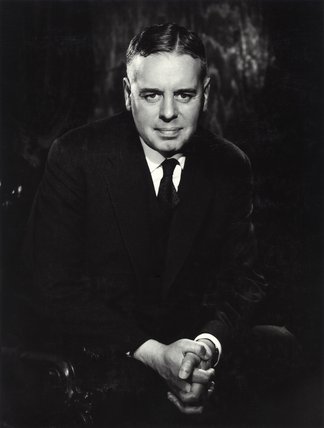
For those who have ever read the good little book by C. K. Barret, The Signs of an Apostle, they can appreciate this man's scholarship. This book has helped me greatly in today's discussion about apostles.
Well, this servant of the Lord passed away on August 26 of this year. I would just like to pay tribute to this man, who although I never met, taught me so much about a subject which is so important to all of us today.
May he rest in peace.
Subscribe to:
Comments (Atom)