Saturday, January 2, 2016
Tuesday, December 29, 2015
Lesson 3. Conscience
This is my third video in the Sunday School series. Due to copyright, I cannot embed it here, however, you can still follow the following link to have a look at it.
https://youtu.be/7iB3RJ74mTE
Bible Reading Plans for 2016
It's almost 2016, and as a good Christian, you may be thinking how to get through your Bible reading this coming year.
I am pleased to provide you with a variety of the reading plans so you can pick the one that best suits you, and are able to read Scripture in this coming year.
Every Christian is to read and know the Scriptures. Relying on the Sunday Sermon is not enough, one must make it a habit to read the Word for growth, knowledge, and hear from God.
You can find the reading plans here.
Enjoy.
I am pleased to provide you with a variety of the reading plans so you can pick the one that best suits you, and are able to read Scripture in this coming year.
Every Christian is to read and know the Scriptures. Relying on the Sunday Sermon is not enough, one must make it a habit to read the Word for growth, knowledge, and hear from God.
You can find the reading plans here.
Enjoy.
Sunday, November 8, 2015
The New Calvinism
This article was published in TIME magazine more than 6 years ago, and I am happy that it's still on their archives.
Just in case they take the decision to take it down, I am posting it here, for later reference.
===================================================================
By David Van BiemaThursday, Mar. 12, 2009
Just in case they take the decision to take it down, I am posting it here, for later reference.
===================================================================
By David Van BiemaThursday, Mar. 12, 2009
If you really want to follow the development of conservative Christianity, track its musical hits. In the early 1900s you might have heard "The Old Rugged Cross," a celebration of the atonement. By the 1980s you could have shared the Jesus-is-my-buddy intimacy of "Shine, Jesus, Shine." And today, more and more top songs feature a God who is very big, while we are...well, hark the David Crowder Band: "I am full of earth/ You are heaven's worth/ I am stained with dirt/ Prone to depravity."
Calvinism is back, and not just musically. John Calvin's 16th century reply to medieval Catholicism's buy-your-way-out-of-purgatory excesses is Evangelicalism's latest success story, complete with an utterly sovereign and micromanaging deity, sinful and puny humanity, and the combination's logical consequence, predestination: the belief that before time's dawn, God decided whom he would save (or not), unaffected by any subsequent human action or decision.
Calvinism, cousin to the Reformation's other pillar, Lutheranism, is a bit less dour than its critics claim: it offers a rock-steady deity who orchestrates absolutely everything, including illness (or home foreclosure!), by a logic we may not understand but don't have to second-guess. Our satisfaction — and our purpose — is fulfilled simply by "glorifying" him. In the 1700s, Puritan preacher Jonathan Edwards invested Calvinism with a rapturous near mysticism. Yet it was soon overtaken in the U.S. by movements like Methodism that were more impressed with human will. Calvinist-descended liberal bodies like the Presbyterian Church (U.S.A.) discovered other emphases, while Evangelicalism's loss of appetite for rigid doctrine — and the triumph of that friendly, fuzzy Jesus — seemed to relegate hard-core Reformed preaching (Reformed operates as a loose synonym for Calvinist) to a few crotchety Southern churches.
No more. Neo-Calvinist ministers and authors don't operate quite on a Rick Warren scale. But, notes Ted Olsen, a managing editor at Christianity Today, "everyone knows where the energy and the passion are in the Evangelical world" — with the pioneering new-Calvinist John Piper of Minneapolis, Seattle's pugnacious Mark Driscoll and Albert Mohler, head of the Southern Seminary of the huge Southern Baptist Convention. The Calvinist-flavored ESV Study Bible sold out its first printing, and Reformed blogs like Between Two Worlds are among cyber-Christendom's hottest links.
Like the Calvinists, more moderate Evangelicals are exploring cures for the movement's doctrinal drift, but can't offer the same blanket assurance. "A lot of young people grew up in a culture of brokenness, divorce, drugs or sexual temptation," says Collin Hansen, author of Young, Restless, Reformed: A Journalist's Journey with the New Calvinists. "They have plenty of friends: what they need is a God." Mohler says, "The moment someone begins to define God's [being or actions] biblically, that person is drawn to conclusions that are traditionally classified as Calvinist." Of course, that presumption of inevitability has drawn accusations of arrogance and divisiveness since Calvin's time. Indeed, some of today's enthusiasts imply that non-Calvinists may actually not be Christians. Skirmishes among the Southern Baptists (who have a competing non-Calvinist camp) and online "flame wars" bode badly.
Calvin's 500th birthday will be this July. It will be interesting to see whether Calvin's latest legacy will be classic Protestant backbiting or whether, during these hard times, more Christians searching for security will submit their wills to the austerely demanding God of their country's infancy.
Labels:
Albert,
Arminianism,
Biema,
Calvin,
Calvinism,
David,
Evangelicals,
John,
Jovel,
Luis,
Lutheranism,
Mohler,
new,
Protestant,
Puritan,
Reformation,
TIME,
Van
Thursday, November 5, 2015
October Biblical Carnival
I have not posted in English for a long time, but today, I wanted to start once again. I don't have a great English following, but I hope that someone will be taking notice of this blog.
I am posting the whole October Carnival, but be aware, credit goes to Phillip J. Long.
====================================================================
I am posting the whole October Carnival, but be aware, credit goes to Phillip J. Long.
====================================================================
![]() |
| Typical Blogger |
Welcome to the Biblical Studies Carnival for October 2015. This is BiblioBlog Carnival 116. The first BiblioBlog carnival was Joel Ng at Ebla Logs in March 2005. That blog is not long gone, but you can read an archive of it at Peter Kirby’s Biblioblog Top 50. I took over as the “keeper of the list” in summer of 2012 when Jim Linville of Dr. Jim’s Thinking Shop retired from blogging. This marks three and half years of cajoling people into volunteering to host carnivals. I guess that is half-a-tribulation period, for the dispensationalists in the audience. in fact, 116*6 is 696, and if you flip the middle number, well, there it is. Another blood moon prophecy fulfilled.
I looked over the Carnival I hosted in July of 2012 and was surprised how many blogs have disappeared, but also how many new, active bloggers have arrived recent years. There are still many solid, scholarly blogs out there who do the Christian community a service by doing at least some of their work in public for all to share. I am happy to see so many publishers supporting BiblioBloggers and urge them to continue to look to scholarly blogs as reviewers.
Before I get to the links, next month’s carnival will feature Jim West (@drjewest) uniting all the BiblioBlog Carnivals under one ecumenical roof for the November carnival. I expect to hear all the SBL gossip and AAR skinny from Jim on December 1, 2015. Jennifer Guo (@jenniferguo ) will celebrate the completion of her first semester of Seminary with the December carnival on January 1, 2016. Tim Bulkeley has January 2016, Jacob Prahlow (@prahlowjacob) has February, James Pate has March 2016. This means I have April 2016 (Due May 1) through the rest of the year open. Carnivals are a great way to attract attention to your site if you are new blogger, but more importantly it gives you a chance to highlight the best and the brightest in the world of bibliblogs. Contact me via email (plong42@gmail.com), DM on twitter (@plong42) or a comment on this post and I can contact you.
If you are heading to SBL, the annual Bloggers’ gathering at SBL/AAR is set for Sunday night. In honor of SBL/AAR, The Needless Complexity of Academic Writing. If anyone is still finishing their paper, here is an academic paper name generator to save you some time. While on the topic of white guys meeting together, J. K. Gayle comments on White Male Bibliobloggers and “rape threats as a matter of course.” She laments the ongoing dearth of women in BiblioBlog carnivals, in ranked biblioblog listings, and at biblioblogger dinners and social functions around academic conferences.
I have noticed a few non-English BiblioBlogs over the years, but I am not sure anyone has made any index of these resources. One of the best is Manuel HG at Estudio Biblico Online. He is collecting audios and videos by biblical scholars of Spanish speaking countries. His site is an excellent resources for Spanish language scholarship.
Over the last few Biblical Studies Carnivals, several hosts have lamented the decline in quality posts. Some of the older BiblioBlogs have closed or merged, newer blogs have yet to gain momentum. Blogs were once thought to be a place to experiment with ideas and get feedback from like-minded colleagues. I do see quite a few good posts coming through at Christian Origins, but it is a fact academic blogs are less active that three or five years ago.
One factor in the decline of the BiblioBlog may be the availability of academic papers at Academia.edu. I regularly find excellent papers on this site and while the ability to discuss a posted paper is not ideal, It seems to me Academia.edu has become a place for the discussion and publication of ideas in a way blogs cannot. Papers include recent and older journal articles posted by the authors as well as links to their work elsewhere. Here are some examples posted in the month of October, others are placed in appropriate sections throughout this post.
- Eva Mroczek, “The Hegemony of the Biblical in the Study of Second Temple Literature“
- Timothy Lim, “Qumran Scholarship and the Study of the Old Testament in the New Testament,” JSNT 38 (2015): 68-80.
- Brent Nongbri, “Two Neglected Textual Variants in Philippians 1,” JBL 128 (2009): 803-808.
- Daniel Pioske, “Retracing a Remembered Past: Methodological Remarks on Memory, History, and the Hebrew Bible” Bib Int 23.3 (2015): 291-315.
- Gunnar Lehmann and Hermann Michael Niemann, “When Did the Shephelah Become Judahite?” Tel Aviv 41 (2014): 77-94.
Old Testament
Randy McCracken examines four stories about stomach-stabbings in 2 Samuel. I bet that’s the only stomach-stabbing biblioblog post for October!
Here is an interview with Bo H. Lim on Love and Violence in Hosea.
“Head” and “Headship” in Genesis 1-3 from Marg Mowczko (@MargMowczko). Marg also had a nice piece on “Are Men Accountable for their Wives’ Actions?” (my wife votes no, by the way).
David Corder comments on “Hezekiah – Crisis and Trust” at The Outward Quest.
Gili Kugler, “The Dual Role of Historiography in Psalm 106: Justifying the Present Distress and Demonstrating the Individual’s Potential Contribution” ZAW 126(2014):546-553.
William Hart reviewed Ken Brown’s The Vision in Job 4 and Its Role in the Book: Reframing the Development of the Joban Dialogues (FAT/2 75. Tübingen, Germany: Mohr Siebeck, 2015), concluding “an essential development in Joban studies which all scholars working with Job must take into consideration.”
Archaeology
This has been in the news for most of the month: Sunni extremist group IS blows up ancient Arch of Triumph in Syria’s Palmyra…unless it was all a Jewish conspiracy (which it is not).
More Canaanite evidence found by New Orleans Baptist Theological Seminary’s dig team that the ancient water system at Tel Gezer is Canaanite.
Thomas L. Thompson argues Israel Finkelstein and William Dever are not all that different than the “biblical archaeology” of William F. Albright.
Randy McKraken interviews archaeologist Luke Chander while Michael Smith asks “How can Archaeologists Make Better Arguments?” (From the September issue of The SAA Archaeological Record).
Non-Canonical Writings
Here is a seven minute video from Craig Keener on Lost Gospels. In the seven minutes it takes you to watch this video, Keener wrote 314 pages of a new commentary.
Richard Goode asks (and answers) “Which book of the Apocrypha did Paul use most?”
April DeConick shared the news about the new journal, Gnosis.
Brian W. Davidson comments on Andrew Perrin on the Aramaic Dead Sea Scrolls, and his new book, The Dynamics of Dream-Vision Revelation in the Aramaic Dead Sea Scrolls (V&R, 2015).
A new Saturday series on the Pseudepigrapha from William Hart Brown, Pseudepigrapha: A Brief Introduction
New Testament
From The Jesus blog, The Modernist Controversy and the Excommunication of Alfred Loisy. At last check, The Jesus Blog is now home to six scholars (Le Donne, Keith, Pitre, Crossley, Jacobi, Rodríguez). Like the Borg, resistance is futile.
In The Historically Theological Jesus Simon J. Joseph argues “our disciplinary distinction between history and theology leads us to think that history and theology are methodologically incompatible, with scientific “history” representing the disinterested, neutral pursuit of knowledge and “theology” representing confessional conviction.”
A 40+ minute presentation on Historia de Jesús by Xabier Pikaza and another on Jesus by Antonio Piñero (both in in Spanish).
Jeannine Brown posted her 2004 Word and World article on “Silent Wives, Verbal Believers: Ethical and Hermeneutical Considerations in 1 Peter 3:1-6 and Its Context.”
Neil Godfrey has a nice summary of James Dunn’s interest in Historical Jesus Studies.
The Center for the Study of New Testament Manuscripts (CSNTM) interviewed textual criticism scholars at the Society of Biblical Literature conference in San Diego, California in 2014. They are available from CSNTM at iTunes University.
Michael Bird asks “Why Did the Romans Persecute Christians?” “Most likely Christ-believers were singled out because they were regarded as committing national apostasy.”
Larry Hurtado continues to argue for Early Christian Diversity, “This early Christian diversity, however, was not a number of totally separate communities or forms (hence, my dissatisfaction with “early Christianities”). As I contend in a recent article, the diverse expressions of early Christianity seem to have been in vibrant contact with one another, sometimes conflicting, at other times seeming to agree to overlook differences, at other times seeking to persuade others of their own views/emphases.”
Ronald V. Huggins wonders if the “High Christology of the First Verse of the Earliest Book in the New Testament?” Huggins thinks Galatians 1:1 is arguably the earliest Christian text it has a “high Christology.” James McGrath briefly responds.
Paul Davidson comments on The Development of the Lord’s Prayer.
James Snapp, Jr. on “The ESV versus the ESV”. “The ESV released in 2007 was not the same as the ESV that was issued in 2001, and the ESV that was issued in 2011 was not the same as the ESV that was issued in 2007.”
Michael Kok gives us a sneak peek at his SBL paper on Markan Christology.
Bill Mounce on Relative Time in Participles.
Lindsay Kennedy finishes his series on Romans 7. He concludes the “I” in Romans 7 is clearly. . . [spoiler alert]. Lindasy also started a new series in October on Mark 13, working through Stein, France/Wright, MacArthur/Pettegrew, and Bolt.
Exegetical Tools interviewed Joseph Hellerman, author of Philippians in B&H’s Exegetical Guide to the Greek New Testament.
Wayne Coppins has a very nice translation/summary of Christine Jacobi on Social Memory and Jesus Tradition in Paul.
James McGrath discussed neglected aspects of 2 Timothy 3:16.
Deane at Biblical Studies Online offers a handy set of links to the Syndicate Symposium on Chris Keith’s Jesus against the Scribal Elite.
Theology & Church History
Alyssa Hall comments on The Relevance of Sola Scriptura for the Modern Church.
Marg Mowczko asks, “Is all sin equal in the eyes of God?”
Austin Channing comments on Sin Problems and the Skin Problem.
Scot McKnight makes a proposal for “honest tension” as a model for Egalitarians.
Claremont School of Theology associate professor Grace Yia-Hei Kao comments on how she came to find (or claim) her scholarly voice.
What about that Country Club Catholicism?
A World Wide Communion Sunday Sermon from Jes Kast-Keat.
Tim Bulkeley at Sansblogue wonders what happens when conservatism and the Bible clash.
Reta Finger discusses biblical hermeneutics, inspiration and authority.
The Velveteen Rabbi comments on “The Specialness of the Ordinary” as well as a report from a Jewish Renewal Simchat Torah service.
Daniel Kirk on why “divine identity” Christology is like Biblical inerrancy.
Kendra Weddle Irons encourages us to take the Bible seriously and stop taking verses out of context.
Just a few Church History links: A historical perspective on Religious Liberty, and the Parables from Roger Williams (ca. 1603-1683). Jim West had some things to say about Zwingli’s Second Zurich Disputation. Joshua R. Ziefle observes that Some Things Do Change as he begins to read Jaroslav Pelikan‘s five-volume The Christian Tradition: A History of the Development of Doctrine.
Book Reviews
Jodi Magness reviewed James Charlesworth’sThe Tomb of Jesus and His Family? Exploring Ancient Jewish Tombs Near Jerusalem’s Walls (Grand Rapids: Eerdmans, 2013) and Ben Witherington comments on the review, the tomb, and anything else he darn well wants to.
Madison N. Pierce at Biblical and Early Christian Studies reviewed Matthew W. Bates, The Birth of the Trinity: Jesus, God, and Spirit in New Testament and Early Christian Interpretations of the Old Testament.
Mike Boling reviews the The Jewish Study Bible (Second Edition).
Jacob Prahlow reviewed A History of Christian-Muslim Relations by Hugh Goddard (Chicago: New Amsterdam Books, 2000).
Ben Witherington has been reading John Barclay’s Paul and the Gift (Eerdmans, 2015). This looks like a great book, by the way and I will be reviewing here soon.
Andrew King at the Blog of the Twelve reviews John D. Currid, Against the Gods: The Polemical Theology of the Old Testament. Wheaton: Crossway, 2013.
James Pate reviews Walter C. Kaiser, Jr. Tough Questions about God and His Actions in the Old Testament (Kregel, 2015) and Kyle Greenwood, Scripture and Cosmology: Reading the Bible Between the Ancient World and Modern Science ( IVP Academic).
Lindsay Kennedy reviews Graham Goldsworthy, The Son of God and the New Creation (Crossway 2015).
Neil Gofdrey interacts with Radical: My Journey from Islamist Extremism to a Democratic Awakening by Maajid Nawaz
Todd Scacewater at Exegetical Tools reviews Aposynagōgos and the Historical Jesus in John: Rethinking the Historicity of the Johannine Expulsion Passages, by Jonathan Bernier (Brill, 2013).
William Hart Brown (@willhartbrown) reviewed a few important books this month: Jeremy D. Smoak, The Priestly Blessing in Inscription & Scripture: The Early History of Numbers 6:24-26 (Oxford University Press, 2015); Eric M. Meyers and Mark A. Chancy, Alexander to Constantine: Archaeology of the Land of the Bible (Yale University Press, 2014); Travis DeCook and Alan Galey (editors), Shakespeare, the Bible, and the Form of the Book (Routledge, 2014).
![]() |
| Another Biblioblogger |
Other Interesting Reads
Carl R. Trueman (Paul Woolley Professor of Church History at Westminster Theological Seminary) states Historical is Not Enough in response to Rod Dreher’s “The Struggle of Memory Against Forgetting” in the American Conservative.
Gina Messina-Dysert offers some commentary on the Pope’s address to US Bishops failing to mention women.
Scot McKnight on prayer in the early church.
8 Reasons the Worship Industry Is Killing Worship. (I’m looking at you, Chris Tomlin….)
Andy Naselli offers 3 Reasons for a Pastor-Theologian to Get a PhD, based on the book The Pastor Theologian: Resurrecting an Ancient Vision (Grand Rapids: Zondervan, 2015).
Seriously?
By far the most theologically important post this month, Josh Ziefle on The Conversion of Han Solo.
Jim West points out an early “least necessary conference of the year” candidate, Orange is the New Bible Symposium at Sheffield, “An interdisciplinary conference for undergraduate and postgraduate students exploring the Bible and the cult Netflix TV series, Orange is the New Black.” I guess the Monty Python conference was such a success….
By far the least theologically important contribution of the decade, Benjamin Corey informs us Sarah Palin appears in a documentary opining on “What the Bible Really Teaches on Violence.” Benjamin also calls out Donald Trump for quoting parts of the Bible that do not actually exist.
In Conclusion…
Thanks for reading the whole Carnival, or at least scanning through the list for your own name and accidentally making it to the end. Seriously, go back through the list and click all the links (again). Head over to Jim West’s alt-Carnival and save yourself a seat for the 117th Biblical Studies Carnival at Zwingli Redivivus on December 1.
Monday, October 27, 2014
Lesson 2 Paradox, Mysteries and Contradictions
Labels:
Anselm,
Calvinism,
christian,
Contradictions,
God,
Grudem,
Jesus,
Jovel,
Luis,
Luther,
Mysteries,
Paradox,
philosophy,
RC,
Sproul,
theology
Friday, October 24, 2014
Lesson 1 Divine Revelation - General Revelation
Thursday, October 23, 2014
Enclave Theology
Via Mike Bird:
Sadly, I encounter these type of people way too often.
By ‘enclave’ theology, I mean a theology based narrowly in a single tradition that seeks not to learn from other traditions and to enrich them, but instead to topple and defeat them, or at least to withstand them. Enclave theology is polemical theology even when it assumes an irenic facade. Its limited agenda makes it difficult for it to take other traditions seriously and deal with them fairly. Whether openly or secretly, it is not really interested in dialogue but in rectitude and hegemony…Because of its temptation to misrepresent or devalue traditions with which it disagrees, such theology is finally divisive and futile … Enclave theology makes itself look good, at least in its own eyes, by making others look bad. George Hunsinger (“The Eucharist and Ecumenism”, p. 1)
Sadly, I encounter these type of people way too often.
Wednesday, October 15, 2014
African Christians don't read African authors - The same goes for Latin Americans.
This blog is written by a Latin American, so many things will have to do with how I see the world from a Latin American perspective.
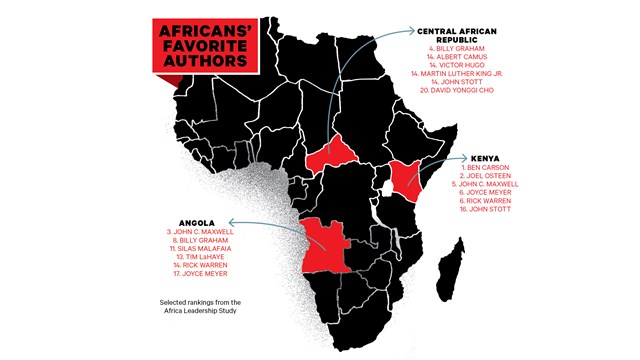
Christianity Today has published an article that mentions how Africans are reading more christian American authors rather than authors from their own continent, that also write christian books. The article gives many reasons why authors from Africa don't feel compelled to write, but it also reflects the interest within the African community about prosperity gospel, and also about how much they know about the American type of Christianity, and how little they know about their own.
In Latin American, we suffer a similar thing. The prosperity Gospel teachers chew books out of the printer regularly. There's also a growing section of Christianity that are reading faithful Christian writers from the USA, Canada, Australia and Europe. This is good, but they don't go beyond that. Some, only read Reformed flavoured literature, and at times, only XVI century writers, that don't relate to the practical pastoral issues being faced in the continent.
This article, along with that particular whole issue of Christianity Today, opens us to the world of how diverse Christianity can be. It's not a sin to be different, if we are still faithful to the word of God.
Christianity Today has published an article that mentions how Africans are reading more christian American authors rather than authors from their own continent, that also write christian books. The article gives many reasons why authors from Africa don't feel compelled to write, but it also reflects the interest within the African community about prosperity gospel, and also about how much they know about the American type of Christianity, and how little they know about their own.
In Latin American, we suffer a similar thing. The prosperity Gospel teachers chew books out of the printer regularly. There's also a growing section of Christianity that are reading faithful Christian writers from the USA, Canada, Australia and Europe. This is good, but they don't go beyond that. Some, only read Reformed flavoured literature, and at times, only XVI century writers, that don't relate to the practical pastoral issues being faced in the continent.
This article, along with that particular whole issue of Christianity Today, opens us to the world of how diverse Christianity can be. It's not a sin to be different, if we are still faithful to the word of God.
Labels:
Africa,
America,
Australia,
Canada,
Christianity,
Europe,
God,
gospel,
Jesus,
Jovel,
Latin,
Luis,
prosperity,
Reformed,
Today,
USA
Tuesday, October 14, 2014
Are you a fan, or are you a fan?
At Church, we are doing the course "Are you a fan or a follower?"
Thom Rainer, some time ago, talked about this issue, but with inverted roles. This is what Rainer says:
A college football fan loves to win. The typical church member never wins someone to Christ. A college football fan gets excited if a game goes into overtime. A church member gets mad if the pastor preaches one minute past the allocated time. A college football fan is loyal to his or her team no matter what. A church member stops attending if things are not going well. A college football fan is easily recognized by his or her sportswear, bumper stickers, and team flags. Many church members cannot even be recognized as Christians by people with whom they associate. A college football fan pays huge dollars for tickets, travel, and refreshments for games. A church member may or may not give to his or her church. A college football fan reads about his or her football team every day. A church member rarely reads the Bible once in the course of a week. A college football fan attends the game no matter how bad the weather is. A church member stays home if there is a 20 percent chance of rain. A college football fan invites others to watch the game every week. A church member rarely invites someone to church. A college football fan is known for his or her passion for the football team. A church member is rarely known for his or her passion for the gospel. A college football fan will adjust gladly to changes in kickoff time. A church member gets mad if his or her service time is changed by just a few minutes. A college football fan is loyal even if he or she never gets to meet the coach. A church member gets mad if the pastor does not visit for every possible occasion.
Subscribe to:
Posts (Atom)