This is truly manipulation to the max.
Have an iphone, with all the info, and then say God is telling you what they need.


1. “You’re just being negative and critical! Don’t you have anything good to say? I can’t believe you’re criticizing (insert famous/popular Christian leader)! At least they’re trying to help-at least they’re doing something! Why can’t you be more positive? I only listen to positive Christians-not haters!”
Christianity is a specific set of beliefs that is based on one holy book: The Bible. “Sola Scriptura” is the Latin phrase meaning “Scripture Alone.” This principle was firmly established during the Reformation in stark contrast to the Roman Catholic Church, which claimed that church authority (the Pope) was equal to scripture.
Because we believe the Bible is God’s Word, we must also believe that some ideas are incompatible with the Bible and must be rejected as false. While it’s true that Christians should not be primarily negative and critical people, we should be willing to say negative and critical things about false teachings, because bad doctrine is very harmful-it leads people away from God. The painful reality is that false teachers are great manipulators and they know exactly what to say in order to keep your trust (and keep their money pouring in), so sometimes it’s necessary to say negative and critical things to confront them and their teachings. The Old Testament prophets, Jesus and all the Apostles did this.
A lot.
We should not be primarily thinking “positive versus negative;” instead, we should be thinking, “true versus false.” The Bible is not always a “positive” book because it contains the truth that we need to hear. We humans are like disobedient children who need correction from our Heavenly Father, who loves us enough to tell us the truth.
In Matthew 23:27 Jesus says “Woe to you, scribes and Pharisees, hypocrites! For you are like whitewashed tombs, which outwardly appear beautiful, but within are full of dead people’s bones and all uncleanness.” Gee whiz, Jesus, that’s not very nice; at least the Pharisees were trying to do something.
2. “But he’s really famous (he has written popular books, has a huge church, has a TV show, etc.), he must know what he’s talking about!” “That many people can’t be wrong!"
This exposes the common belief that “the group is always right” (my group!); which is like saying “consensus equals truth.” Christians say that they believe the Bible, but too often what they really believe is whatever their “guy” (local pastor, TV preacher, famous author/speaker, etc.) says about the Bible. On top of that, if a local pastor is actually doing a good job of faithfully preaching God’s Word, he’s often being over-ridden by the surrounding culture.
We have millions of Christians watching 10, 20 or even 30 hours of television per week, yet they don’t have time to read and study the Bible. But when the latest guru comes along with a new method of “hearing from God” they drop everything to “learn the secret;” yet, they’ve neglected God’s Word-the actual words from God. The situation should be seen as utterly absurd, yet since almost everyone behaves and believes this way, it’s been normalized. As a result, false teachers have free reign and a limitless customer base to promote their weird ideas and enrich themselves.
In Mark 7:7 Jesus says to the Pharisees (quoting Isaiah): “in vain do they worship me, teaching as doctrines the commandments of men.” In Matthew 7:13-14 He says: “Enter by the narrow gate. For the gate is wide and the way is easy that leads to destruction, and those who enter it are many. For the gate is narrow and the way is hard that leads to life, and those who find it are few.” Jesus is warning us not to follow the teachings of men (even if it’s a NY Times Best-seller!), and not to “go with the group.” Psalm 118:8 “It is better to take refuge in the LORD than to trust in man.”

 Bernard Starr, of the Huffington Post has done a superb interview to Lawrance H. Schiffman, on how the New Testament describes Jewish practices and beliefs of the Second Temple Judaism period.
Q. The Sabbath mandate for rest and renewal in Jewish law and tradition invokes many restrictions on activities---particularly work. Acts 1:12 mentions the allowable distance one can walk on the Sabbath before it is considered a violation. Didn't Jews always know and practice that?
A. Yes and No. Yes we know about that law, but some say that these particular Sabbath laws only came into existence after the destruction of the Second Temple. But here we have verification that the laws existed in Jesus' time in the first century--- and that the disciples were scrupulously following Jewish law. In Acts 1:12 they were able to walk to the Mount of Olives (Olivet) on the Sabbath because it was in the allowable distance --"A Sabbath day's Journey away" of 3000 ft (2000 cubits). In fact, archaeological excavations have uncovered stones in some locations for marking the Sabbath limits. .

2. Sharing
We hear a pastor say, “There are some things I just want to share with you today…”
Since when is the man of God some Dr. Phil and Oprah combo? You’re supposed to proclaim a message. If you’re not preaching, glory is not coming down. You have to preach the glory down—people have to hear a word from God.

One of the nation’s foremost scholars of the New Testament and early Christianity, Helmut Koester began teaching at Harvard Divinity School in 1958, and continued to teach at both HDS and the Harvard Extension School through the fall of 2014. He received the Petra T. Shattuck Excellence in Teaching Award in 2005. From 1975 to 1999 he was editor of the journalHarvard Theological Review, and he served for many years as co-editor and chair of the New Testament editorial board of the Hermeneia series, a critical and historical commentary on the Bible published by Fortress Press. His books include the two-volume Introduction to the New Testament (New York: De Gruyter, 1982, second edition, 1995 and 2000), Ancient Christian Gospels: Their History and Development (London: SCM Press and Philadelphia: Trinity Press International, 1990), Paul and His World: Interpreting the New Testament in Its Context(Minneapolis: Fortress Press, 2007); and From Jesus to the Gospels: Interpreting the New Testament in Its Context (Minneapolis: Fortress Press, 2007).
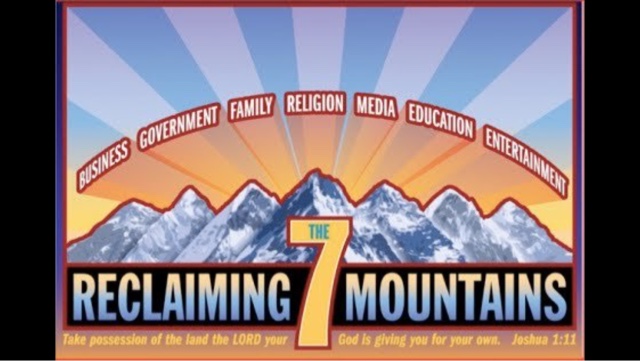 The people who support this non-sense have no biblical leg to stand on. The verse cited at the bottom is out of context.
