Showing posts with label world. Show all posts
Showing posts with label world. Show all posts
Wednesday, May 1, 2013

Thursday, February 28, 2013

Monday, December 10, 2012

Sunday, December 9, 2012

Saturday, October 20, 2012
Sunday, August 12, 2012
NBC doesn't know what the flags of the world are
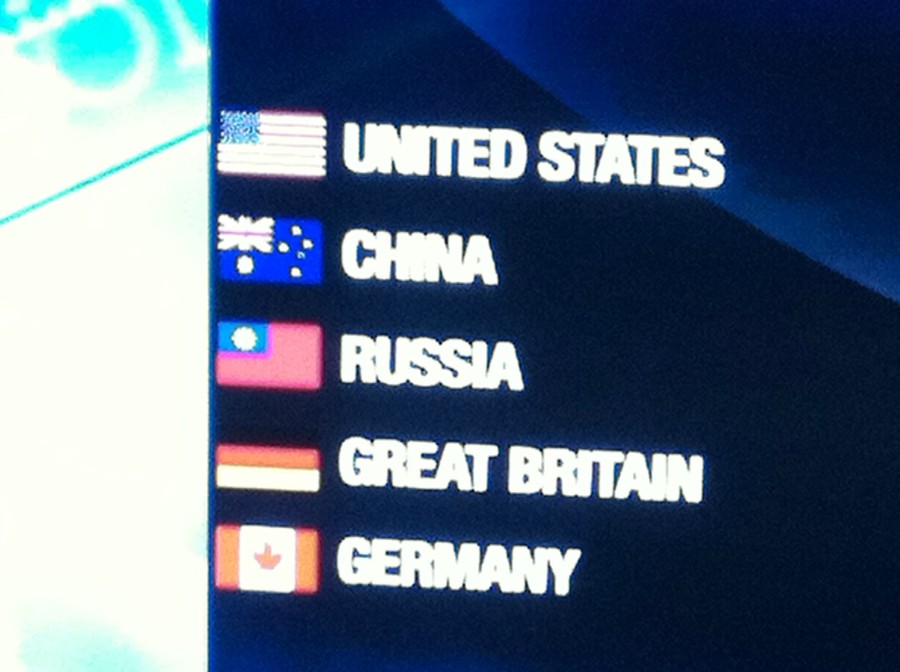
And Americans complain why the rest of the world consider them provincial. Even those who live in provinces know better!!!
Friday, July 20, 2012
Let's laugh and learn with our Lutheran friends
I am not a Lutheran, or wish to be one. But I appreciate how some make the christian faith available, and well, this is one of those I watch to learn, and laugh.
Monday, July 9, 2012
Sermons should be sermons, not speeches

Sermons are usually the part of worship I most look forward to. They’re the heart and intellectual meat of the service. But precisely because I have such high hopes for the sermon there’s been more than one occasion when I’ve been deeply disappointed — because the sermon wasn’t really a sermon. It was actually just a speech, and there is a difference. Here are a few general examples:
— The Museum Visit (or, the Archeological Dig): These types of preachers have usually taken one or more biblical studies courses. There’s nothing wrong with that — except that the sermons sound like they copied out an entire biblical commentary. This sort of sermon contains way too much historical detail from its particular era, obsesses over who might have written and/or edited the story and how it compares to “what actually happened,” and recounts all the evidence (either supporting or negating the biblical account), which archeologists have unearthed in what is surmised to be the original location of the event. While it’s a good idea to consult a biblical commentary or two when preparing a sermon, and to provide some historical background, if there’s too much, it can feel like you’re at a museum or a history lecture instead of in church. Most worryingly, it can feel like instead of hearing the Word of God, you’re just leafing through ancient documents that are irrelevant for the life of the community of faith today. With too much historical focus, the Bible becomes ancient history, and we miss out on a sense that it’s a living word, with narratives and images in which we participate, and which thereby shape our lives. This isn’t to say that the Bible is timeless and has no context, or that its meaning is fixed and unchanging. It speaks to us in our context and from its context, and yet, somehow, also transcends both.
— The Pitch: This one is common among guest preachers. They go up to the front of the sanctuary under the pretense of giving a sermon, but it turns out to really be a thinly-veiled fundraising pitch for their particular organization or cause. I’ve actually heard a “sermon” in which the budget of a particular organization was discussed! I’m not saying that it’s not important to hear about church organizations and the work they’re doing. This would be perfectly appropriate as the application part of a sermon, with strong ties to Scripture passages. But the problem is, these sermons usually have a few isolated verses loosely tied to the work of the organization (i.e., proof-texting), and that’s it. While sharing resources and supporting such work is one aspect of church and worship, that doesn’t mean the sermon can be co-opted into an advertising pitch (or a boardroom meeting). Didn’t Jesus have a thing or two to say against making the temple into a marketplace?
— The Agenda: This one has some things in common with “The Pitch,” in that its use of Scripture is pretty clumsy. In this type, the preacher has already made up his or her mind as to what the message will be, before approaching the Scripture passages. As a result, the sermon ends up being not so much what the passages are saying to the church, but what the preacher wants them to say, and has forced them to say, without carefully reading and listening to the texts themselves (sometimes called “eisegesis”, reading into the text, instead of “exegesis,” the interpretation of what the text has to say). A variation on this is that the preacher doesn’t refer to the text much at all, but simply uses the sermon as an opportunity to rant about a given issue, using his or her own opinion or perhaps, random non-theological resources. It’s possible to preach on contemporary issues, and of course, to be creative in one’s scriptural interpretation. But there should still be a balanced and profound point made, as well as some biblical and theological content.
So what exactly is it that makes a sermon more than just a speech, as these three examples are? It’s not terribly complicated, as I see it. I’ve already hinted at what I see as the components of a good sermon, namely:
— Sound biblical exegesis and inter-textual connections: By all means, preachers should look at one or more biblical commentaries and theology books, and include particulars of the original contexts of the passages and their interpretation throughout history. But the Bible is more than history; it’s literature and story and poetry too. We tend to read the Bible looking for what was “left out,” what’s “behind” the text. But it’s much more interesting to look at what is there, and the deliberate and intentional way the Bible was written and put together. I especially love learning about the interconnections between the lectionary passages for the week, since they aren’t just chosen at random.
— A sense of the Bible as a sacred, living text: Preparation for a sermon involves reading and re-reading and re-re-reading the text. This isn’t a book like any other, just to be studied and picked apart. In the life of the church, the Bible is a sacred, living text. Sermons should reflect this, and thus recognize that the sermon has traditionally been understood in the church to be the time when the Word of God is preached, meaning that it’s one of the ways in which God speaks to us. So, it’s not a task to be taken lightly, nor is it something — and feel free to disagree with me here — that just anyone can do.
— Inspiration and challenge: Because I understand faith to be something that doesn’t just comfort us but also challenges or even unsettles us, I think sermons are one important way in which we are challenged — challenged to change our way of thinking about something, challenged to change our way of relating to other people, challenged to change our very way of life. They also give us hope to make these changes.
So, I’d like to hear a sermon, not a speech, during worship.
Susie Guenther Loewen is a doctoral student in theology, specializing in the themes of gender, suffering and the cross, and she attends Toronto United Mennonite Church. This post is provided thanks to our partnership with the Young Voices blog of Canadian Mennonitemagazine.
Thursday, June 14, 2012
How people have seen the world maps throughout history
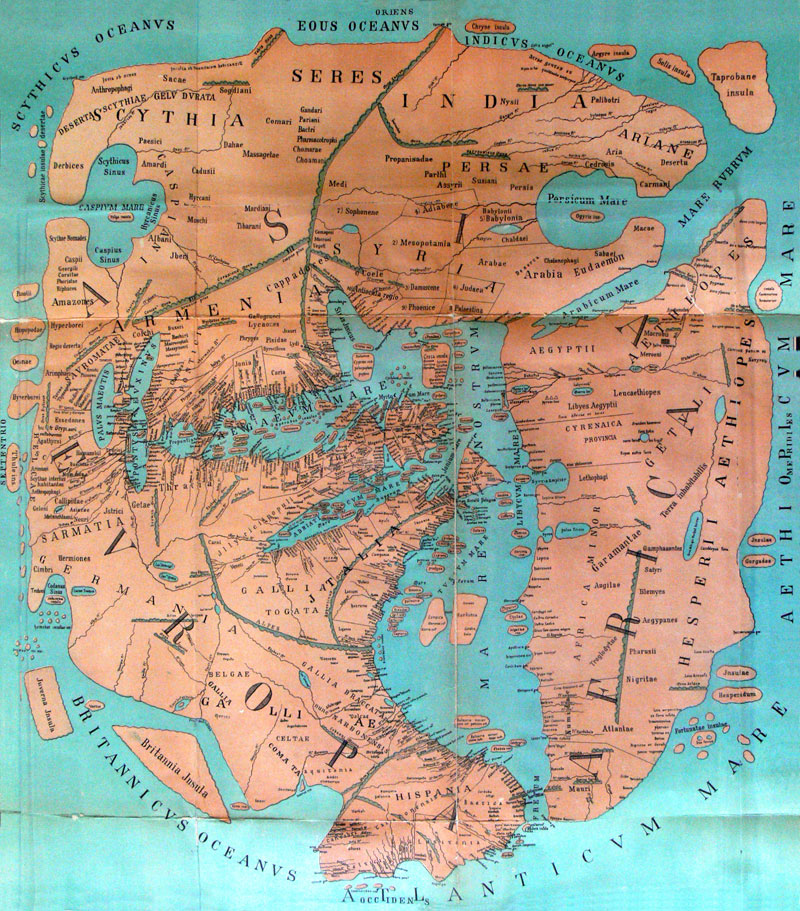
Here it's a website of maps of how people saw the world from before the time of Christ, to after the time of the discovery of America (the continent, not the USA, please, the whole continent is named America).
Wednesday, May 23, 2012
Places where being a woman is a bad thing

This is something that is still present in our culture. And sometimes, it is very disappointing to see that many of the countries that think and condem other countries that so blatantly brake the human rights of women.
Well, I leave with you the graphic, and hopefully you will know more about where and what type of human rights are being broken against women everywhere.
Saturday, January 21, 2012
Who is your best friend, the world, or Jesus?

It is very easy to be a friend of the world, isn’t it? The world offers us everything we want, material things, entertainment, and sometimes even some sentimental things. But we read that if we are friends with the world, we become enemies of God!
Sometimes, we can come to the conclusion that the world is a better friend than God. The world doesn’t seem to required or demand anything from us, rather, seems to be very good at giving if we accept its way of thinking and living. Jesus may look to be a very demanding person, cf. John 14:15 “If you love me, you will keep my commands”. Isn’t friendship a two-way relationship? Well, it seems if you are a friend of Jesus, you must not be a friend of the world.
What can the world offer us that is better than what Jesus offers? Jesus offers to us eternal life, and he offers us real peace, not temporal and illusory peace, cf. John 14:” 27 Peace I leave with you; my peace I give you. I do not give to you as the world gives. Do not let your hearts be troubled and do not be afraid.”
What the world offers us is temporal, Jesus offers us eternal life, and his love, that fulfils way more than what the world does. Let’s be friends with God, since it will pay up in this life and the next.
Monday, October 24, 2011
Ten wrong predictions of the end of the world and other events
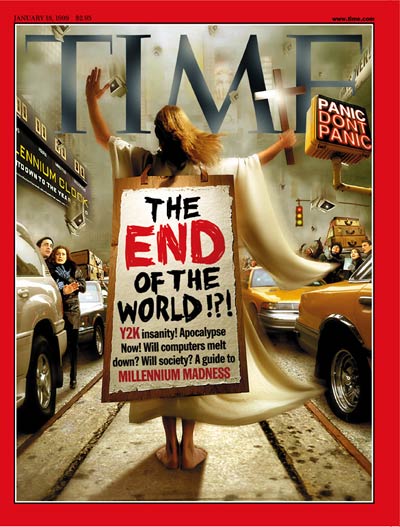
To me, this is more like a death wish, the end of the world. Why can't people just wish their own end, but have to include the rest of us, is beyond me.
Well, Time has published its Top 10 Failed Predictions. It would be a good idea for the rest of us to read them, and to see how people can get things wrong, and still be so unrepentant as Harold Camping.
But the predictions don't stop with the end of the world. There are plain flat denials about how the world works and is. Take for instance, The Flat Earth Society.
The last wrong predictions, number 10, is telling of how the Western historical narrative is so wrong. The the fall of Communism in Easter Europe and the Soviet Union, Francis Fukuyama thought that society and civilisation was in a path of evolution, being democracy and capitalism the pinacle of that evolution. The small article points two things out, that there's a great discontent in our liberal democratic countries, yet, undemocratic China is on the rise. The system that doesn't work for North Korea or Cuba, apparently works very well in China economically.
Well, interesting read. I commend you to read the ten worst predictions. Of musical interest, see prediction number 5, where the Beatles were dismissed as washed up before they hit it big.
Luis A. Jovel
Monday, October 10, 2011

Subscribe to:
Posts (Atom)